

Scripture for Reflection: Proverbs 10:19 (NLT): “Too much talk leads to sin. Be sensible and keep your mouth shut.”
If you’ve ever tried to catch a fish—a really good fish, the kind of fish worthy of a photo and a respectful release—you know the absolute, non-negotiable value of stillness. You understand the importance of quiet. A careless twitch of the rod, a loud clearing of the throat, or a sudden, unnecessary splash can send a prize fish darting away before it ever considers your bait.
And yet, in our day-to-day lives, we seem to have collectively forgotten this essential, quiet wisdom. We live in a world that doesn’t just tolerate noise; it rewards it. Our phones ping, our social feeds scroll, and every single person is encouraged to have—and loudly share—an opinion on everything, all the time. Our culture acts as if silence is a vacuum that must be instantly filled with ourselves.
But the timeless wisdom of the Scriptures, captured perfectly in today’s proverb, whispers a profound warning against this tendency: “Too much talk leads to sin. Be sensible and keep your mouth shut.”
The Bible doesn’t hate speech; it hates the sin that too often rides in on the back of careless, constant, or uncontrolled speech. Think of all the ways our words can go wrong: the gossip that starts as a “need to share,” the snap judgment that burns a bridge, the quick, cutting joke, or the unnecessary defense that turns a simple disagreement into a full-blown war.
And this brings us to a phrase worth meditating on as we navigate this noisy world: It is often more wise to remain silent than it is to exercise a freedom of speech.
This isn’t about surrendering your right to speak; it’s about elevating your wisdom above your immediate, often defensive, impulse. It’s about recognizing that not every thought needs to be a declaration, and not every comment needs to be heard.
I once knew a wonderful soul named Silas who fished the quietest coves along the coast. He was a master of his craft, not because he had the latest, greatest gear, but because he had the greatest patience.
Silas used to say, “Son, fishing is just like a good marriage—it’s 90 percent listening and 10 percent knowing when to gently tug.”
One blustery morning, a young, eager fisherman pulled his boat up beside Silas. The young man, bursting with energy and frustration, immediately started complaining to Silas: about the choppy water, about his faulty depth-finder, and especially about his lack of catch. He just kept talking—loudly—about all the mistakes everyone else was making and how he would fix them.
Silas, who was just settling his line, simply smiled, dipped his hand in the water, and held up a finger to his lips. “Easy, friend,” he whispered. “The fish are listening.”
The young man scoffed. “Fish don’t have ears, old man! I know they don’t.”
Silas chuckled warmly, shaking his head. “Ah, but they feel the vibration. They feel the commotion. Every time you get loud and thrashy, you tell the whole water you’re desperate, you’re reckless, and you’re no good to be around. The good fish—the ones with true wisdom—they swim away to find a quiet place.”
Silas wasn’t just talking about bass and trout; he was talking about peace, opportunity, and the richness of relationship—with God and with others.
Our spiritual lives, and the friendships we cherish, are like that quiet cove. When we fill them with continuous, reckless chatter, we create spiritual commotion that pushes away the good “catch”—the peace of God, the clarity of thought, and the patience needed for true wisdom.
When we keep our mouths shut, we are creating a place of stillness where the Holy Spirit can move and where true blessings can gently settle. The sensible person that Proverbs describes understands that silence is not weakness; it is a profound act of spiritual control. It is choosing to hear the still, small voice of God over the immediate, loud demands of our own ego or the crowd.
As you go through your day, ask yourself: Am I speaking to help, or am I speaking simply to make noise?
Let the warm wisdom of the old fisherman settle deep in your heart. Seek to be quick to listen and slow to speak. In doing so, you will not only avoid the sin that so easily trips up the careless talker, but you will also create the quiet, calm waters where the greatest spiritual catches can be made.
Reflection Step: Before engaging in a significant conversation today, close your eyes and take a deep breath. Pray a two-second silent prayer: “Lord, help me be sensible.” Then, actively listen twice as much as you speak.
Monthly Archives: November 2025
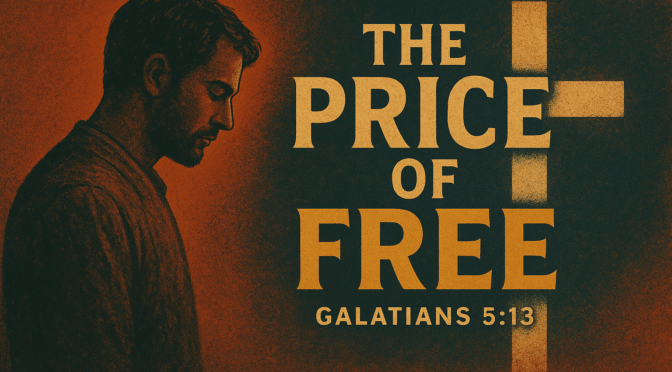
The Price of Free
Galatians 5:13 (NLT) — “For you have been called to live in freedom, my brothers and sisters. But don’t use your freedom to satisfy your sinful nature. Instead, use your freedom to serve one another in love.”
There’s a saying that’s been rolling around in my head this week: “The price of free is always paid for by another.”
That line hits differently on Veterans Day. Freedom has a price tag—always has. Some paid it with years away from home, others with scars seen and unseen, and some paid it with their very lives. Every time we breathe the air of liberty, we inhale a gift someone else fought to preserve.
When I was younger, I used to think freedom just was—like sunshine or gravity—something that existed naturally and belonged to everyone equally. But as I’ve grown (and hopefully gotten a little wiser), I’ve realized freedom doesn’t just happen. Someone carries it on their back, through the mud, through the fear, through the fire. Freedom is never free—it’s borrowed from the brave.
And that’s where the Gospel comes crashing in, doesn’t it? Jesus, too, paid the price for our freedom. The cross wasn’t a moment of convenience; it was the ultimate act of courage and love. In His suffering, He took on the weight of sin, fear, and death so that you and I could live forgiven, unchained, and fully alive.
In Wesleyan theology, we often talk about grace as God’s love freely given to us. But even “free grace” came at a cost—just not one we could ever afford. Christ’s death and resurrection bought our pardon, opened our prison doors, and whispered into our weary hearts, “You’re free to go—and free to serve.”
Veterans embody a glimpse of that divine story. Their service reflects the heart of sacrificial love. When John Wesley wrote about holiness, he said it wasn’t about rules or perfection—it was about “love excluding sin and filling the heart.” In other words, holiness looks like love in motion. And that’s what we see in every person who has put on a uniform and chosen service over self.
I remember talking once with a veteran who told me, half-jokingly, “I didn’t sign up for the pay.” Then he grinned and added, “I just wanted to make sure my kids could grow up in a country that let them chase their dreams.” There was humor in his words, but also deep truth. Service motivated by love always costs something—but it’s the kind of cost that transforms us.
So today, let’s be thankful—not with passive gratitude that nods politely and moves on, but with the kind that stirs us to action. Let’s honor veterans by living with purpose, compassion, and courage. Let’s honor Christ by using our spiritual freedom not for comfort, but for service.
Because here’s the thing: gratitude that never gets its hands dirty isn’t gratitude at all—it’s sentiment. True thankfulness looks like helping a neighbor, forgiving someone who doesn’t deserve it, or showing up when it would be easier to stay home.
Veterans remind us that freedom worth having is freedom worth sharing. Jesus reminds us that freedom worth sharing is freedom worth dying for.
So, this Veterans Day, as we pause to remember and to give thanks, let’s also recommit ourselves to the holy work of love—the kind that costs something but gives everything. The price of free was paid once and for all on a hill called Calvary. Our response is simple: live free, love deeply, and serve faithfully.
Prayer:
Lord, thank You for the men and women who have served our country and for Your Son, who served humanity. Teach us to live in gratitude—not just in words, but in the way we love and serve others. Help us honor the gift of freedom by walking in grace and sharing it freely. Amen.
There’s a saying that’s been rolling around in my head this week: “The price of free is always paid for by another.”
That line hits differently on Veterans Day. Freedom has a price tag—always has. Some paid it with years away from home, others with scars seen and unseen, and some paid it with their very lives. Every time we breathe the air of liberty, we inhale a gift someone else fought to preserve.
When I was younger, I used to think freedom just was—like sunshine or gravity—something that existed naturally and belonged to everyone equally. But as I’ve grown (and hopefully gotten a little wiser), I’ve realized freedom doesn’t just happen. Someone carries it on their back, through the mud, through the fear, through the fire. Freedom is never free—it’s borrowed from the brave.
And that’s where the Gospel comes crashing in, doesn’t it? Jesus, too, paid the price for our freedom. The cross wasn’t a moment of convenience; it was the ultimate act of courage and love. In His suffering, He took on the weight of sin, fear, and death so that you and I could live forgiven, unchained, and fully alive.
In Wesleyan theology, we often talk about grace as God’s love freely given to us. But even “free grace” came at a cost—just not one we could ever afford. Christ’s death and resurrection bought our pardon, opened our prison doors, and whispered into our weary hearts, “You’re free to go—and free to serve.”
Veterans embody a glimpse of that divine story. Their service reflects the heart of sacrificial love. When John Wesley wrote about holiness, he said it wasn’t about rules or perfection—it was about “love excluding sin and filling the heart.” In other words, holiness looks like love in motion. And that’s what we see in every person who has put on a uniform and chosen service over self.
I remember talking once with a veteran who told me, half-jokingly, “I didn’t sign up for the pay.” Then he grinned and added, “I just wanted to make sure my kids could grow up in a country that let them chase their dreams.” There was humor in his words, but also deep truth. Service motivated by love always costs something—but it’s the kind of cost that transforms us.
So today, let’s be thankful—not with passive gratitude that nods politely and moves on, but with the kind that stirs us to action. Let’s honor veterans by living with purpose, compassion, and courage. Let’s honor Christ by using our spiritual freedom not for comfort, but for service.
Because here’s the thing: gratitude that never gets its hands dirty isn’t gratitude at all—it’s sentiment. True thankfulness looks like helping a neighbor, forgiving someone who doesn’t deserve it, or showing up when it would be easier to stay home.
Veterans remind us that freedom worth having is freedom worth sharing. Jesus reminds us that freedom worth sharing is freedom worth dying for.
So, this Veterans Day, as we pause to remember and to give thanks, let’s also recommit ourselves to the holy work of love—the kind that costs something but gives everything. The price of free was paid once and for all on a hill called Calvary. Our response is simple: live free, love deeply, and serve faithfully.
Prayer:
Lord, thank You for the men and women who have served our country and for Your Son, who served humanity. Teach us to live in gratitude—not just in words, but in the way we love and serve others. Help us honor the gift of freedom by walking in grace and sharing it freely. Amen.